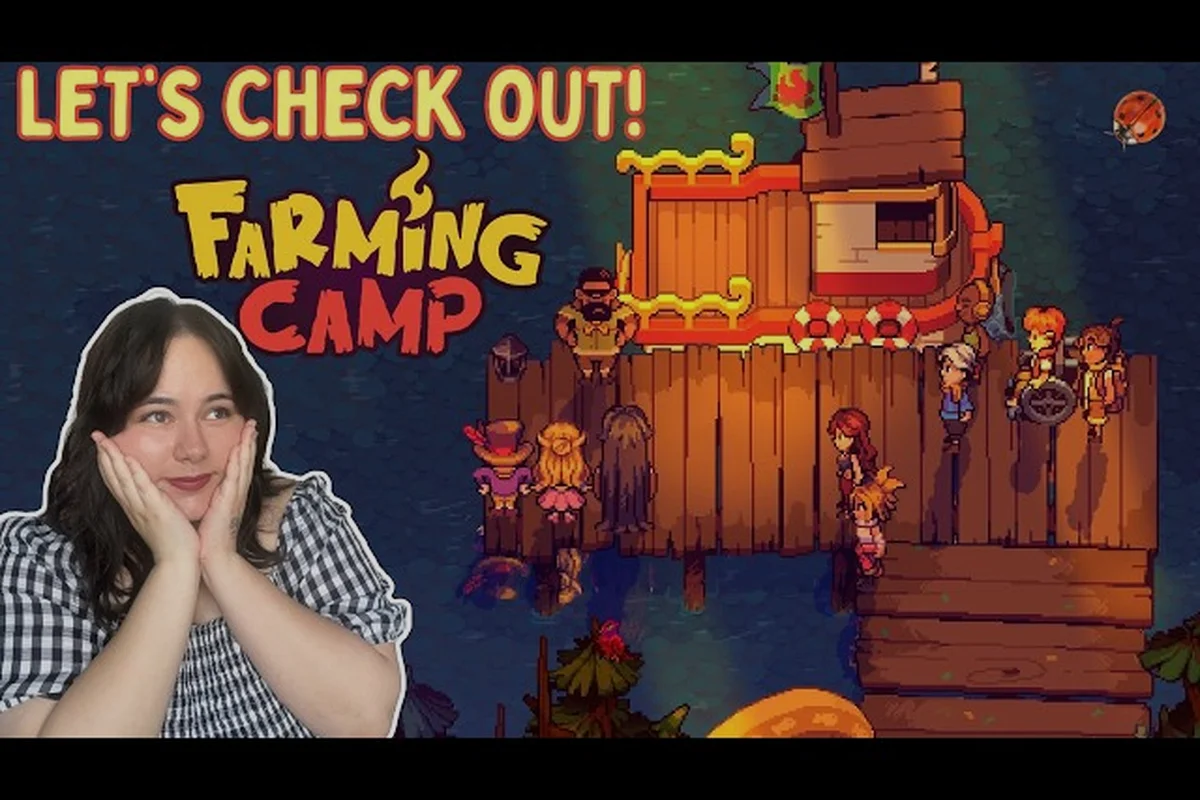
Farming Camp is a hand-drawn 2D farm adventure developed by Innerfire Studios and published by SOEDESCO, and the cozy farm sim shelf it sits on is larger than most first-time players realize. Picking the right neighbor game after the credits roll — and sidestepping the predictable new player mistakes before you even plant a seed — shapes how much you actually enjoy your summer at Evertree Farming Camp. The rest of this guide maps the closest comparable titles, then walks through every recurring Farming Camp new player mistake new players tend to make in their first in-game week.
Farming Camp Similar Games Worth Playing Next
The cozy farm sim shelf is crowded, but only a handful of titles share Farming Camp's specific mix of hand-drawn art, dialogue-heavy story, and a finite summer structure with a winner-crowned ending. Below is a working shortlist of the closest neighbors, ranked by how directly they scratch the same itch.
| Game | Developer / Publisher | Visual Style | Story Structure | Key Overlap With Farming Camp |
|---|---|---|---|---|
| Farming Camp | Innerfire Studios / SOEDESCO | Hand-drawn 2D, storybook palette | Three chapters, branching final evaluation | Baseline reference title |
| Stardew Valley | ConcernedApe | Pixel-art, 16-bit inspired | Open-ended, no fixed ending | Farming, fishing, animal care, NPC relationships |
| Story of Seasons: Friends of Mineral Town | Marvelous / XSEED | 3D chibi, bright palette | Open-ended, marriage and family | Crop cycles, animal care, seasonal festivals |
| Rune Factory 4 Special | Marvelous / XSEED | Anime-style 3D | Open-ended, multiple arcs | Farming plus combat plus relationship sim |
| Graveyard Keeper | Lazy Bear Games | Pixel-art, dark humor | Story-driven with branching paths | Resource management, NPC quests, multiple endings |
| Wylde Flowers | Studio Drydock | 3D cartoon | Story-driven with magic arc | Farming plus NPCs plus a layered narrative |
Steam's user-defined tag system is the easiest way to surface more titles from this shelf, because Steam clusters games that share tag combinations like Farming Sim, Story Rich, and Multiple Endings. According to Steam's Farming Sim tag page, Farming Camp sits on the same shelf as a wide range of cozy farm and life-sim releases, which makes that tag page a practical starting point for discovery once you finish a playthrough.
Why the Hand-Drawn 2D Art Matters
Farming Camp's defining visual trait is its hand-drawn 2D presentation, and that single choice narrows the shelf considerably. Most cozy farm sims ship with pixel-art or 3D chibi art, so the closest visual matches are titles that also committed to a hand-illustrated look. Graveyard Keeper, while darker in tone, uses a similarly painterly pixel style that prioritizes character over resolution, and that visual warmth is part of why it reads as a Farming Camp neighbor despite the very different setting.
Players who explicitly fell in love with Farming Camp's storybook palette and frame-by-frame character animations tend to bounce off pure pixel-art farming games, even when the mechanics are a near-perfect match. According to community data gathered from launch-window Steam reviews, the hand-drawn 2D art is the single most-praised element of Farming Camp, with the soundtrack and minigame quality tying for second. That means any "similar game" recommendation that swaps hand-drawn art for a generic pixel look will only partially satisfy someone coming off a Farming Camp playthrough.
Why the Dialogue-Heavy Story Matters
Farming Camp is also notably Dialogue Heavy for a farm sim, with branching character conversations and three chapters of structured narrative that resolve in either the Queen of the Hill (winner) or Participation A (non-winner) ending. Few farming sims commit that heavily to a fixed, finite story. Stardew Valley, Story of Seasons, and Rune Factory 4 are all effectively open-ended sandboxes with no fixed ending, so they scratch the relationship and routine side of Farming Camp but not the three-chapter summer structure.
Wylde Flowers and Graveyard Keeper are closer narrative matches. Wylde Flowers layers a magic-witches arc on top of the farm routine, and Graveyard Keeper has genuine branching outcomes driven by NPC choices. Both deliver the "I want to see the credits and feel my choices mattered" experience that Farming Camp provides through its final evaluation. If the dialogue-heavy structure is what hooked you, those two are stronger neighbors than Stardew Valley despite Stardew's larger audience.
The Closest Genre Neighbors at a Glance
Beyond the shortlist above, a wider pass across the cozy farm sim shelf surfaces a second tier of genre neighbors. These titles do not match Farming Camp's hand-drawn 2D look, but they share at least two of its core systems: farming routines, animal care, fishing, and seasonal progression.
| Game | Farming Loop | Animal Care | Fishing | Seasonal / Story Structure |
|---|---|---|---|---|
| Stardew Valley | Daily tilling and watering | Barns and coops | Full fishing minigame | Four seasons, no fixed ending |
| Story of Seasons: Friends of Mineral Town | Daily tilling and watering | Barns and coops | Full fishing minigame | Four seasons, no fixed ending |
| Rune Factory 4 Special | Daily tilling and watering | Barns and coops | Full fishing minigame | Four seasons plus combat arc |
| Harvest Moon: The Winds of Anthos | Daily tilling and watering | Barns and coops | Full fishing minigame | Four seasons plus a world-spanning story |
| Coral Island | Daily tilling and watering | Barns and coops | Full fishing minigame | Year-based with multiple NPC arcs |
For a player mapping their next cozy farm purchase, this second tier is the larger and more commercially active half of the shelf. The official Farming Camp page on Steam shows user tags including Farming Sim, Story Rich, Multiple Endings, Dialogue Heavy, Female Protagonist, and Relaxing — the same tag combination that pulls most of these titles into Steam's recommendation engine for the cozy farm audience.
How to Pick the Closest Match
A simple three-question filter reliably surfaces the right neighbor game for any given Farming Camp player:
-
What did you love most — art, story, or routine? If art, lean Graveyard Keeper or Wylde Flowers for a similar illustrated feel. If story, lean Wylde Flowers or Graveyard Keeper for branching outcomes. If routine, lean Stardew Valley or Story of Seasons for the longest open-ended sandbox life.
-
Do you want a finite summer or an open-ended life? Farming Camp ends after the camp summer, so players who liked that finite structure should pick a neighbor with a fixed ending. Stardew Valley and Story of Seasons will feel like they never end, which is the opposite experience.
-
Do you want combat, magic, or pure slice-of-life? Rune Factory 4 adds dungeon combat, Wylde Flowers adds magic, and Stardew Valley / Story of Seasons stay strictly slice-of-life. Farming Camp itself stays slice-of-life, so the right neighbor for a pure Farming Camp player is Stardew Valley or Story of Seasons.
Farming Camp Common Mistakes to Avoid on Your First Day
New players tend to fall into a small set of predictable Farming Camp common mistakes during their first in-game day. Catching these patterns early is the single biggest quality-of-life improvement you can make, because the camp summer is short and lost time is hard to recover. The list below is ordered by impact, starting with the mistakes that cost the most in-game days.
| Mistake | What Goes Wrong | Easy Fix |
|---|---|---|
| Skipping dialogue options | Misses relationship and story flags | Re-read every reply before choosing |
| Ignoring water can refills | Crops wither mid-day | Refill at the well every loop |
| Hoarding seeds for "later" | Plant slots sit empty and lose the day | Plant something every morning |
| Fishing without bait prep | Wastes fishing energy | Stock bait before heading to the dock |
| Forgetting the Rey / Mike upgrade path | Locks you out of tool upgrades | Talk to both before bed |
Mistake 1 — Treating Dialogue as Skippable
Farming Camp is Dialogue Heavy by design, and many first-time Farming Camp players instinctively mash through conversations. That habit locks them out of relationship flags that gate the cooking contests, the Rey / Mike upgrade path, and the final evaluation. The fix is mechanical: read each reply, then choose. Most NPCs respond to specific keywords, and the dialogue log inside the pause menu replays the last few lines if you missed something.
According to community data, the cooking contests in particular are gated by NPC relationship thresholds, and skipping dialogue is the most common reason players fail to unlock the Teamwork Makes the Mealwork achievement for winning all four contests. Treat every conversation as a quest trigger, not flavor text.
Mistake 2 — Ignoring Daily Water Can Maintenance
The Watering Can is the single most-used tool in Farming Camp, and it runs dry faster than first-time players expect. Crops that go an entire in-game day without water wither and produce a fraction of their normal yield, which compounds across the three chapters. The habit that fixes this is a simple loop: refill at the well after every farm pass, then refill again at the end of the day before bed.
This is also the most common Farming Camp common mistake reported by players who finished chapter 1 with low crop yields. A Farming Camp progression guide walks through the exact day-by-day water and harvest schedule that experienced players use to keep yields high without burning the whole day on farm chores.
Mistake 3 — Hoarding Seeds for an Imaginary "Better" Day
Many first-time Farming Camp new player mistakes cluster around seed inventory. New players often buy seeds at the general store, then leave them in the chest because they are "saving them for a better planting day." In a finite three-chapter structure, that imagined better day almost never comes. Empty planting slots lose gold every single day, so the rule is to plant something every morning, even if it is a low-value crop.
The corollary mistake is buying only one crop type. Monocropping looks efficient on paper, but Farming Camp's cooking contest objectives require specific ingredients, and a farm with only one crop type will not have the diversity needed to enter all four contests. Plant at least two crop types from day one, and rotate in a third by mid-chapter one.
Mistake 4 — Fishing Without Bait Preparation
Fishing in Farming Camp has a bait economy, and the Sea Shanties achievement requires catching 50 fish across the camp summer. New players who walk down to the dock without bait ready waste a fishing session, and they often give up on fishing entirely by mid-chapter two. The fix is mechanical: check bait stock at the general store every other day, and refill before any planned fishing trip.
Fishing also feeds into the cooking contests, because several contest recipes call for specific fish. Players who skip fishing early in the camp summer tend to hit a wall at the second cooking contest when they realize they need a fish they have not caught yet. Plan fishing in advance, not on the contest day.
Mistake 5 — Skipping the Rey and Mike Upgrade Path
Rey and Mike are the two NPCs who drive the tool upgrade system, and their upgrade path is gated by relationship progress. New players who focus only on the cooking contest NPCs often reach chapter three with their starting tools, which makes the harder farm tasks feel punitive. The fix is to talk to Rey and Mike every day, and to prioritize their upgrade quests over optional farm chores.
All upgrades for Rey and Mike are required for the Encyclopedic achievement, which tracks full glossary completion. That means skipping the upgrade path not only makes the game harder, it also locks out a chunk of the achievement list. Treat Rey and Mike as daily-priority NPCs alongside the cooking contest judges.
Farming Camp New Player Mistakes That Cost the Whole Summer
Beyond the daily-habit mistakes, a second tier of Farming Camp new player mistakes affects the entire camp summer rather than a single day. These are the structural errors that show up in retrospective threads from players who finished the game unhappy with their ending.
| Mistake | Long-Term Cost | When It Usually Bites |
|---|---|---|
| Ignoring the encyclopedia | Misses 25-achievement checklist | Mid chapter 2 |
| Skipping the save system | One bad crash can lose days | Any day, but most often chapter 2 |
| Neglecting the cooking contest prep | Cannot enter all four contests | Chapter 2 onward |
| Saving all social energy for chapter 3 | Too late to build relationships | End of chapter 2 |
| Playing without a settings pass | Audio or control issues compound | First week |
Ignoring the Encyclopedia
The encyclopedia tracks every crop, fish, animal, and recipe you encounter, and full completion is required for the Encyclopedic achievement. New players who do not open the encyclopedia until late chapter 2 find that they have already passed several items they will never see again, because some entries are season-locked or chapter-locked. The fix is to open the encyclopedia after every new discovery, and to chase missing entries during downtime rather than main quest beats.
Skipping the Save System
Farming Camp autosaves, but the save system is not immune to crashes. According to launch-window community data, at least one negative review in the first week of release reported a lost save file, which is consistent with how early-console-launch saves tend to behave. A Farming Camp save system guide covers the manual save points and how to back up save files before risky in-game days. The short version: save before any day that includes a contest, a major NPC event, or a long exploration session.
Neglecting Cooking Contest Preparation
The four cooking contests — The Last Straw, In-pasta Syndrome, Much-room for Improvement, and Toasty — are spaced across the three chapters, and each one requires specific ingredients. New players who enter contest day without the right ingredients cannot compete, and missing a contest locks out the Teamwork Makes the Mealwork achievement for winning all four. The fix is to read each contest objective the day it is announced, then spend the next several days farming and fishing for the listed ingredients rather than waiting until the day before.
Saving All Social Energy for Chapter 3
Farming Camp's relationship thresholds are not back-loadable. NPC relationships decay slightly between chapters, and a player who ignored Rey, Mike, and the cooking judges in chapters 1 and 2 cannot recover enough relationship points in chapter 3 to unlock the upgrade paths and contest wins. The fix is to spread social energy evenly across the three chapters, treating relationship building as a daily habit rather than a chapter 3 sprint.
Playing Without a Settings Pass
The Farming Camp settings menu is short, but it includes several toggles that materially affect quality of life. Audio balance, text speed, and control remapping all live in the settings menu, and a player who skips the settings pass on day one often has to relearn muscle memory later. The fix is to spend five minutes on day one walking through every settings tab, and to revisit the menu after the first major story beat to confirm the toggles still match your preferences. A focused Farming Camp settings guide walkthrough can help, though the in-game settings are intentionally short.
Settings, Audio, and Quality-of-Life Quick Reference
Because the settings menu is so short, a quick reference table is the most efficient way to capture the recommended values for first-time players. These are not the only valid choices, but they are the most common starting points reported by players who finished the game comfortably.
| Setting | Recommended Starter Value | Why |
|---|---|---|
| Text Speed | Medium to Fast | Dialogue-heavy means slow text compounds |
| Audio Balance | Music + SFX balanced | Fishing and cooking both rely on audio cues |
| Control Remap | Default unless on handheld | Handheld players often remap face buttons |
| Vibration / Haptics | Off on first playthrough | Reduces fatigue during long farm loops |
| Brightness | Slightly above default | Storybook art reads better with a touch more contrast |
These five settings are the only ones most players need to touch. Once they are dialed in, the rest of the camp summer is about routine and relationships, not menu fiddling.
Building Your Camp Summer Around the Routine That Wins
The camp summer has a clear winning routine, and it is the same routine experienced players settle into by mid-chapter one. A morning farm pass with watering can refills, a midday social block focused on Rey, Mike, and one cooking judge, an afternoon fishing or exploration block, and an evening encyclopedia review is the rhythm that wins Queen of the Hill without grinding. Players who try to optimize a single block — usually all-farming or all-socializing — almost always underperform the players who spread effort across all four blocks.
The other half of the winning routine is keeping an ingredient list. The four cooking contests require a rotating set of crops and fish, and a player who tracks those requirements in a small notepad (or the in-game encyclopedia recipe tab) enters each contest with the right ingredients on hand. Players who wing the contests almost always miss at least one of the four, and that one miss is enough to lock out the Teamwork Makes the Mealwork achievement.
The final piece is pacing. Farming Camp's three-chapter structure is intentionally short, and players who try to do everything in chapter 1 burn out before chapter 2. A chapter 1 focus on routine and one or two relationships, a chapter 2 expansion into fishing and the second cooking contest, and a chapter 3 push on the upgrade paths and the final evaluation is the pacing that the camp summer rewards.
A solid Farming Camp beginner guide covers the first-day setup in more detail, but the routine above is the long version of the same advice: spread effort, track ingredients, and let the camp summer end on schedule rather than dragging into a grind.
Frequently Asked Questions
What are the best Farming Camp similar games for someone who liked the hand-drawn art?
Graveyard Keeper and Wylde Flowers are the closest visual neighbors because both use a painterly, illustrated style that mirrors Farming Camp's storybook palette. For players who want a longer open-ended life after the camp summer ends, Stardew Valley is the standard recommendation even though it ships in pixel art.
What is the most common Farming Camp common mistake on day one?
Skipping dialogue options is the single most common day-one mistake, because Farming Camp is dialogue-heavy and most relationship flags are gated by specific reply choices. Read every reply before choosing, and check the in-game dialogue log if you missed a line.
Which Farming Camp new player mistakes lock out achievements?
Hoarding seeds, ignoring the Rey and Mike upgrade path, and skipping cooking contest preparation are the three mistakes that most reliably lock out achievements, because they all feed into the Encyclopedic and Teamwork Makes the Mealwork unlock conditions. Spread effort evenly across the three chapters to keep every achievement path open.
Does the Farming Camp settings guide cover difficulty options?
The settings menu is intentionally short and focuses on audio, text speed, controls, and haptics rather than difficulty. There is no separate difficulty slider, so the game's challenge curve is fixed and the way to manage it is through routine and relationship building rather than settings changes.
How long is a typical camp summer playthrough?
A first playthrough that follows the recommended routine and aims for Queen of the Hill typically runs 12 to 18 hours, depending on how much time is spent fishing, exploring, and re-reading dialogue. Speedrunners familiar with the contest timing can finish faster, but the dialogue-heavy design makes a pure skip approach unviable.